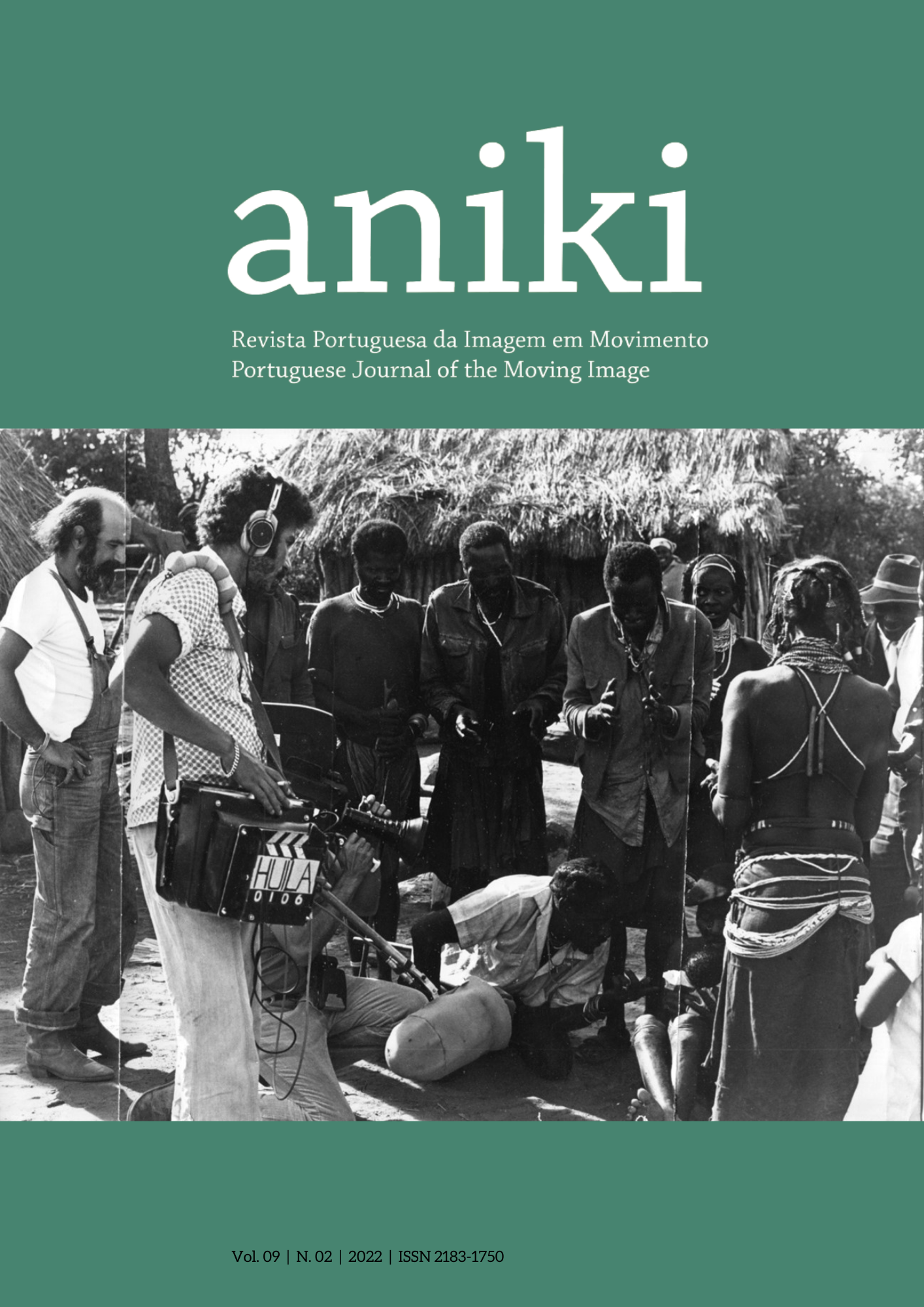
Visual Sediments and Issues of Representation of and by the Arhuaco: The Dialectic of Images from the Capuchin Mission in Nabusímake (Colombia, 1915-1982)
DOI:
https://doi.org/10.14591/aniki.v9n2.896Keywords:
Memory, photography, films, arhuaco, history, dialectical imagesAbstract
The presence of the Capuchin mission in Nabusímake (Colombia, 1915-1982) signified a process of spiritual ethnocide documented by archive images, which constitute the memory of the arhuaco people as part of their visual sediments. In this article, it is argued that the processes of territorial autonomy and expulsion of the Capuchins were accompanied by some ways in which the arhuaco leaders began to have greater recognition, in part due to the appropriation of the images produced about its people. The transition from monopolies of representation to incipient processes of visual sovereignty, in which the arhuacos began to represent themselves with the collaboration of allies like anthropologists and filmmakers, is shown. The circulation of these images has implied an emotional reinterpretation of the past by different voices.
References
Benjamin, Walter. 2007. Sobre la fotografía. Valencia: Pre-textos.
Bolinder, Gustaf. 1966. The Indians of the Tropical Snow-Capped Mountains Investigations in Northern Most South America. New Haven: Human Relations Area File.
Bosa, Bastien. 2015. “Volver: el retorno de los capuchinos españoles al norte de Colombia a finales del siglo XIX. “Historielo. Revista de historia regional y local 7 (14): 141- 179. https://doi.org/10.15446/historelo.v7n14.46767
__________. 2016. “¿Despojados por ley? Los efectos del Decreto 68 de 1916 de la Gobernación del Magdalena sobre la población arhuaca.” Revista colombiana de antropología. 52 (2): 107-138. https://doi.org/10.22380/2539472X41
Clastres, Pierre. 2001. Investigaciones en antropología política. Barcelona: Editorial Gedisa.
De Largy Healy, Jessica. 2013. “Yolngu Zorba meets Superman”. Anthrovisions. https://doi.org/10.4000/anthrovision.362
Harper, Douglas. 2002. “Talking about pictures a case for a photo elicitation”. Visual Studies 17 (1): 13-26. https://doi.org/10.1080/14725860220137345
León, Christian. 2010. Reinventando al otro. El documental indigenista en el Ecuador. Quito: Consejo Nacional de Cinematografía.
Mateus Mora, Angélica. 2013. El indígena en el cine y el audiovisual colombianos: imágenes y conflictos. Medellín: La carreta Editores E.U.
Moderbacher Christine y Winter Grace. 2020. “The life and work of Marquis Robert de Wavrin, an Early Visual Anthropologist”. Visual Anthropology 33 (4): 313-332. https://doi.org/10.1080/08949468.2020.1791571
Mora, Pablo. 2014. Poéticas de la resistencia. El video indígena en Colombia. Bogotá: Cinemateca Distrital: Ideartes.
Muños, Catalina. 2017. “Memory and Photography among the Arhuaco of the Sierra Nevada de Santa Marta, Colombia”. History and Anthropology 28 (3): 375-397. http://dx.doi.org/10.1080/02757206.2017.1281267
Mydin, Iskander [1992] (2006). “Imágenes históricas, públicos cambiantes”. En: Fotografía, antropología y colonialismo (1845-2006), editado por Juan Naranjo, 196-204. Barcelona: Editorial Gustavo Gil, SL.
Naranjo, Juan. 2006. “Introducción. Medir, observar, repensar”. En: Fotografía, antropología y colonialismo (1845-2006), editado por Juan Naranjo, 11-23. Barcelona: Editorial Gustavo Gil, SL.
Orozco, José Antonio. 1990. Nabusímake. Tierra de Arhuacos. Bogotá: ESAP Centro de Publicaciones. Edición Príncipe.
Piault, Marc Henri. 2002. Antropología y cine. Madrid: Cátedra signo e imagen.
Pineda, Gloria. 2015. Cine político marginal colombiano. Las formas de representación de una ideología de disidencia (1966-1976). Bogotá: Ideartes.
Poole, Deborah. 2000. Visión, raza y modernidad. Una introducción al mundo andino de las imágenes. Lima: Casa de Estudios del Socialismo.
Scott James C. 2004. Los dominados y el arte de la resistencia. México D.F.: Edición Era.
Taussig, Michael. 2000. Un gigante en convulsiones. El mundo humano como sistema nervioso en emergencia permanente. Barcelona: Editorial Gedisa.
Uribe Tobon, Carlos Alberto. 1987. “Un antropólogo sueco por Colombia: Gustaf Bolinder”. Boletín Museo del Oro 18. Biblioteca Luis Ángel Arango. Bogotá.